Mar 14, 2016

Tumulus de Kercado - Carnac (France)

As one of Europes oldest megalithic sights the Tumulus of Kercado is situated in the woods of Carnac south of Kermario. It is dated to 4.500 BC.
In former times the Tumulus was surrounded by a Cromlech. Nowadays you can find only a few Menhirs / stones. The Menhir on the top of the Tumulus was set there by its second excavator R. Galles at the beginning of the 20th century.

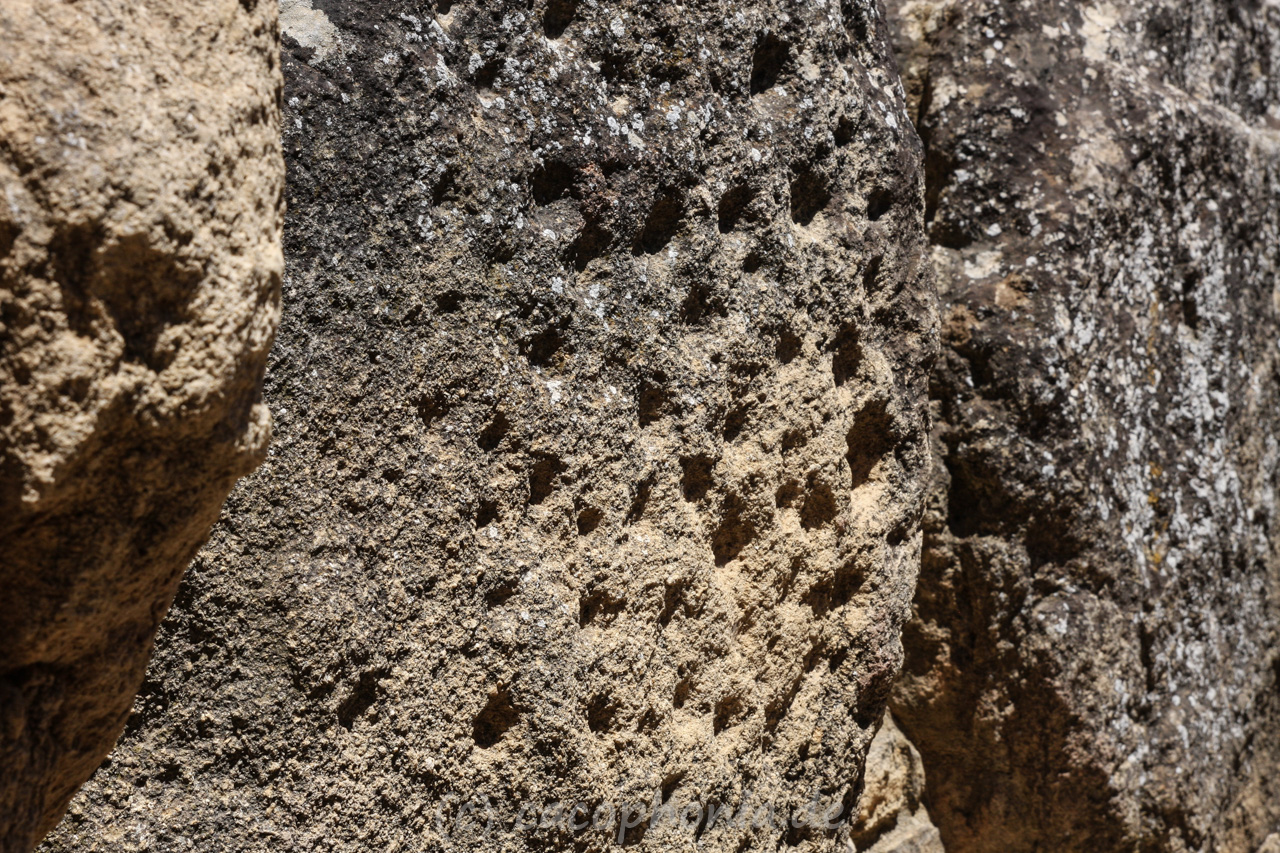
The hill has a diameter of app. 40 metres. Chamber (3,2m x 2,2m) and corridor consist of 17 stones while there are 5 endstones for the corridor and 1 endstone for the chamber. You will find some carvings in the stones. So it is necessary to take a torch with you.
In the chamber and the corridor some grave goods such as axes, arrowheads and pearls have been found.

Geographic coordinates: 47° 35' 45" N, 3° 3' 14" W


Menhir of the former Cromlech around the Tumulus in front of the entrance

Entrance of the Tumulus with Menhir on the top

some remaining Menhirs around the Tumulus

some remaining Menhirs around the Tumulus


Jan 23, 2016

Carnac Stones - Carnac (France)

The best known megaliths of south Brittany are the Carnac Stones. With a length of app. 4 km (original length 8 km) they consist of alignments, dolmens, tumuli and menhirs. With more than 3000 stones (original 4000) the Carnac Stones are the largest collection worldwide.

The alignments parts in three areas which build rows: Ménec alignments (western part), Kermario alignments (middle), Kérlescan and Petit-Ménec (eastern parts). 

In Ménec is a visitor's centre with information about the megaliths and a shop. From the roof-deck you can have a little view to the alignments of Ménec. At the parking area next to the visitor's centre they offer bus tours along the alignments with explanations in different languages.

The stone rows are enclosed, so it is not possible to walk through - only around the area. Maybe you can join a guided tour. Starting with a walk to the western stones of Ménec which are situated in the village near houses the view to the rows is indescribably impressive.

The first part of alignments is parted by a street. An abandoned house shows how people lived surrounded by the ancient megaliths. Along the street in Kermario there is a small dolmen beside the stones. On a small hill you can climb a look-out with a view the western and eastern stones.

Geographic coordinates: 47° 35′ 5″ N, 3° 4′ 40″ W

Alignments of Ménec


Alignments of Kermario


Alignments in the village Le Ménec


Nov 11, 2015

Cromlech de Crucuno - Plouharnel, Brittany (France)

If you pass the Dolmen de Crucuno you can take a walk to the Cromlech (quadrilatère) de Crucuno. After 400 metres turn to the right and after appr. 100 metres you will see the cromlech. It consists of 22 stones in a reactangel of 33 x 25 metres. It is surrounded by fields and forest and not to be seen from the village or the way although it is not far away.


Nov 4, 2015

Dolmen de Crucuno - Plouharnel, Brittany (France)

In the centre of the small village Crucuno (belonging to Plouharnel, along the street D781) a massive Dolmen is to be found. It is situated next to a house and was used as a cattle shed for a long time.
Now the Dolmen consists of 9 stones and a huge and a smaller endstone. I like how it fits into the scenery or vice versa.


Oct 8, 2015

Alignments de Kerzerho - Erdeven, Brittany (France)

Separated through the street D781 from Quiberon to Erdeven stone rows with app. 190 megaliths are to find south of Erdeven. They are quite similiar to the alignments in Carnac standing/lying in rows from east to west. Maybe these rows were an extension of Carnac's alignments? In former times there existed more than 1.000 stones in 65 rows of 2 kilometres length.


Aug 17, 2015

Megalithic Grave - Steinfeld (Germany)

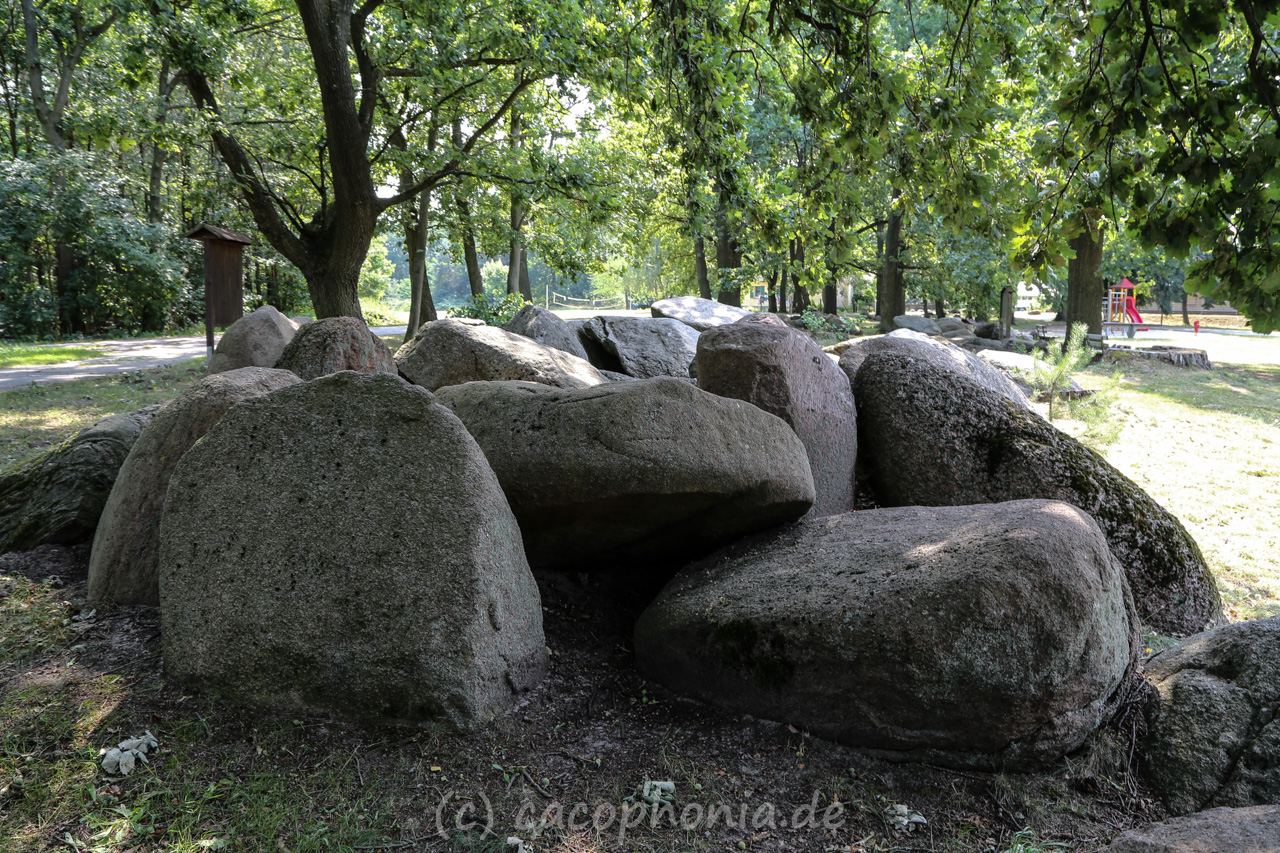
In the village of Steinfeld (district of Bismarck) in Saxony-Anhalt is a big megalithic grave situated near the church, next to a play area.
It is the longest grave in Saxony-Anhalt with a length of appr. 47m and width of appr. 8m. There are 53 stones now, maybe 77 in former times. The grave consists of 17 stones and 6 endstones.
The site dates from 3.500 to 2.800 BC.


Aug 11, 2015

Dolmen de Viera - Antequera (Spain)

Near the Cueva de Menga in Antequera / Andalusia you will find the Dolmen de Viera which is a corridor tomb built app. 3.500 - 3.000 BC. In 1903-1905 the Viera brothers from Antequera discovered this neolithic Dolmen.

More information and the opening hours of the Dolmen de Viera: Link